Can You Use a Blow Torch on Spray Paint Art
Lots of artists, including myself, take come to realization that using a heat source on paintings during and subsequently a pour tin can create some actually cute furnishings. Existence a very analytical left brained person, I've always wanted to really understand why. Then I did a piffling enquiry and thought I'd share.
Why do you use a torch on acrylic pours? The utilize of a heat source on the surface of an acrylic cascade helps pause the surface tension of the pinnacle layer of paint. This allows lighter weight colors rising through the heavier colors and it helps close air pockets and bubbling that may class. Heat as well allows the pigment to flow more rapidly.
I'll dive a little deeper into the mechanics of why these things happen when y'all torch your painting. I think you'll larn that understanding more of the "why" behind torching will make your painting prowess grow.
What is Surface Tension
Surface tension is the special bonds that are created between molecules that are not completely surrounded past other similar molecules. Because these molecules don't have friends about them on one of their faces, normally above them, they tend to stick to the molecules on their sides and bottom with more than energy than normal.
When this happens beyond the entire surface of a liquid, like water, it forms an invisible shield or barrier over the liquid. Something with enough energy, like a stone dropped into a swimming, volition break this bond and sink through this shielded layer. However, something small like a water skeeter bug, will "float" on top of this layer. This is made possible past the surface tension of the water.
When talking nearly surface tension in acrylic pour paintings, this is referencing to the special connexion that the paint molecules have right on the top layer of paint. When y'all pour paint onto a surface or into a container, the tiptop layer forms this bulwark.
With pour acrylics, this surface tension can readily observed when preparing a dirty pour loving cup. If y'all cascade small amounts of paint very slowly into the cup, the new paint sits on peak of the paint already in the cup. The new paint doesn't take plenty energy to break the surface tension barrier, and therefore sits on top of the previous layers. If you pour aggressively into a dirty pour loving cup, the paint immediately breaks the surface tension and dives through top layer of paint.
If the paint is pour in quantity, just non aggressively, information technology as well breaks the top layer's surface tension and dives beneath the surface. Sometimes, this pigment so rises to the summit layer from below but doesn't quite break through the surface tension again coming up from the bottom. When this happens, if the pigment on height is more opaque, you lot can see the new pigment merely beneath the surface through this barrier created by surface tension.
How does Heat Affect Surface Tension?
When rut is applied to liquid paint, the molecules in the pigment gain energy and showtime to move more than rapidly. This additional move of the molecules in a liquid makes that liquid flow more than readily.
When cooking, you encounter this phenomenon quite frequently with heated oils. When y'all first pour oil in a sauce pain information technology is generally thick. Every bit the oil heats, it starts to flow easier and becomes more similar water in it'southward consistency.
So why does rut affect the surface tension of paint? Remember that surface tension is a special bail betwixt molecules on the peak layer. When rut is added, that bond considering less strong because the molecules have more energy and want to move around more, not stick in place with their neighbors. In improver, heated paint flows amend because of the increased free energy betwixt the molecules.
Types of Oestrus Sources for Acrylic Pouring
There are multiple different methods to add heat to your acrylic cascade. The first method is to adjust rut of the room where you are painting. By increasing the temperature in your studio surface area, you tin can help the pigment to catamenia more readily and decrease surface tension.
Conversely, you can cool the room to proceed the paint from flowing equally fast. This may also help our pour acrylics from mixing too much on your paint surface, which sometimes causes muddied colors to class.
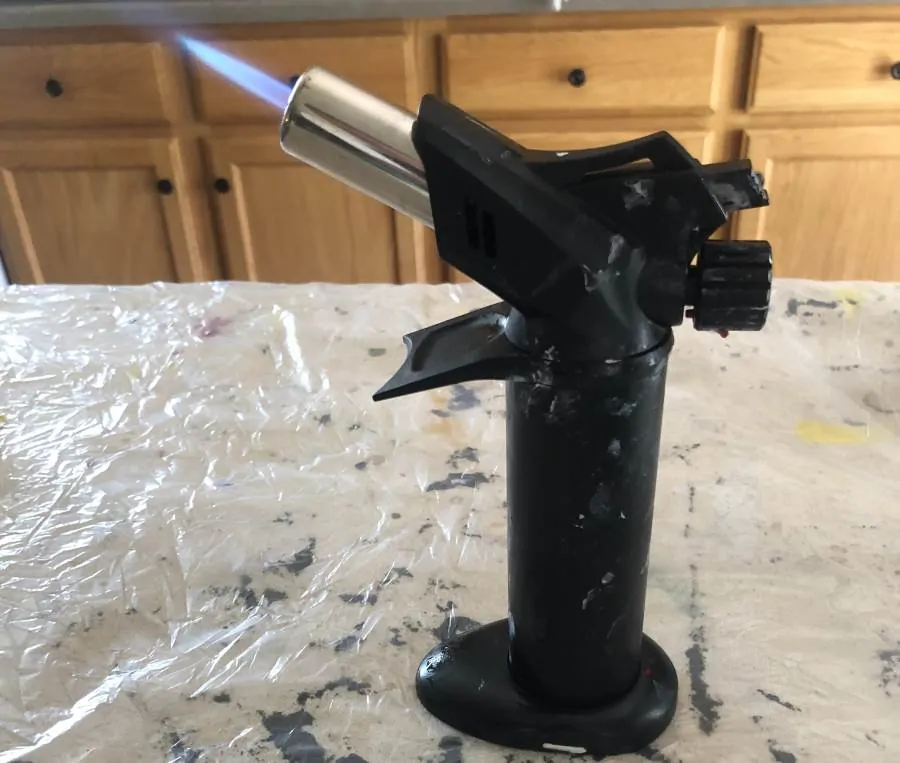
Butane Torch
Butane torches are the virtually mutual way that acrylic cascade artists add together heat to their paintings. Considering of their relatively depression cost and cheap and easy refilling, these tend to be the first option for acrylic pours.
To save money when purchasing a butane torch, try searching for a kitchen torch instead of a craft torch. You lot will probably see a considerable toll deviation between the two even though they essentially the same thing.
You can run into the torch that we used to recommend on Amazon hither or look at our commodity on The 3 Best Torches for Acrylic Paint Pouring.
Rut Gun
Heat guns, which are specialized blow dryers with more heat and less airflow, besides lend themselves well to acrylic pouring applications. Keep in mind these volition motion the paint on the painting surface more than a butane torch will.
Nosotros don't currently employ a heat gun merely we've had our eye on this 1 that yous can get on Amazon.
Use Caution when Using Estrus on Acrylic Pours
Here are a few recommendations for keeping you lot and those around you relieve while using heat application on acrylic pour paintings.
- Keep others away from your painting area.
- Do not use an open up flame near flammable materials.
- Employ short applications of heat.
- Lower the heat output if your heating device.
- Proceed a fire retardant nearby. A basin of sand or a bullpen of water would work as a retarder.
- Use indirect heat. Point your torch or heat gun to the side instead of straight at the painting.
- Be very careful using heat when booze or other flammable materials are used equally mediums or additives.
How Surface Tension and the Weight of Paint Work Together
At present that you understand how heat tin can affect surface tension, why exercise you lot think heat is used to help create cells? The reason for this lies in the difference in the weight of paint mixtures.
When a heavy cloth comes in contact with a lighter material, the heavier will, in most cases, sink. The lighter material will tend to force it's way up every bit the heavy material go down.
This is no different with acrylic pours. Heaver paints will generally fall the lesser of the cup they are in or the painting surface they are on, while lighter ones will requite way to the heavier paint and movement upwards.
Surface tension can inhibit this move. Especially when paint weights are not manifestly dissimilar, as is the case with most bodily acrylic paints used in paint pouring.
If a lighter paint is trying to move up through a heavier paint, merely the surface tension is resisting this motion you don't become cells to grade. However, when we torch the heavier paints on elevation, this allows them to movement more readily and lowers the surface tension. When this tension loss is plenty, the lighter paint can emerge through the top layer.
Breaking the surface tension and letting dissimilar color paints rise through the surface layer colors is how many cells are formed in acrylic pouring.
Visit our article on Acrylic Cascade Cells to discover additional information on how cells course and tips and tricks on how to create them.
How to Reduce Surface Tension without Estrus
Heat and paint weight are non the only things that tin touch on surface tension. Here are a few suggestions that tin influence surface tension.
- Sparse your paint – Thinner paint has more free energy and therefor lowers surface tension. Be conscientious not to thin to much as this volition cause the paint to mix more and requite muddied colors.
- Add Flow Help or Flow Enhancer – These additives, too know as surfactants, help reduce friction betwixt paint molecules so they tin can "flow" meliorate.
- Add Isopropyl Alcohol – Apply pocket-sized amounts of rubbing alcohol in your pigment mixture. This volition also thin the paint and acts every bit a friction reducer. Dripping small amounts of alcohol direct onto your painting can work for more localized result as well.
Related Questions
Practice you lot need a torch for acrylic pouring? Yous do not demand a torch to create acrylic pouring art. Torching is a helpful technique that can add some variety to your work. Creating cells is made easier by combining a heat source, similar torch, with reducing surface tension and increasing the vertical period of pigment.
Tin can I use a kitchen torch for acrylic pouring? The proper name "kitchen torch" is only used to assistance identify a torch with the cooking community. In reality, these torches are generally only regular butane torches that have application in many different hobbies and professions.
Source: https://leftbrainedartist.com/why-do-you-torch-acrylic-pours/
0 Response to "Can You Use a Blow Torch on Spray Paint Art"
Post a Comment